
He’s doing it again! AI Jay Sherman is back and critical as ever. The “The Critic” was cancelled in the mid-90s, but AI keeps his critical spirit alive. Today, I have Jay review “Batman & Robin.” This movie is often cited as the movie that almost killed superhero movies, as a genre. It’s infamous for its goofy puns, cartoonish settings, and Bat Nipples. But does it stink? That’s up to Jay. Enjoy!
AI Jay Sherman Reviews “Batman & Robin” (1997) on TikTok
Filed under AI Art, Artificial Intelligence, television
Why The Internet Was NOT A Mistake
This is a video from my YouTube channel, Jack’s World.
In these cynical days, it’s become common for people to claim the internet was a mistake. It’s blamed for all the worst parts of our current state of affairs. It makes us hate each other. It locks us into our screens. And it brings out our worst selves.
I call bullshit on all of it. The internet was NOT a mistake. And in this video, I explain why.
Filed under Jack's World, technology, YouTube
A Quick Reminder About Economic Bubbles

I am not an economist.
I am not well-versed at finances, investing, and business ventures.
I make YouTube videos and write sexy stories. I just want to put that out there in case anyone thinks I’m smarter than I actually am. I’ll also note that while I do have financial investments that include stocks and cryptocurrency, my approach is as basic as they come. I own only a couple hundred dollars in Bitcoin. And I only buy index funds/ETFs. So, when it comes to financial news and trends, I’m about as informed as anyone else with an internet connection and a news feed.
And if you’re in a similar situation, chances are you’ve seen headlines about a looming economic bubble. You might have even seen dire warnings that there’s a massive bubble surrounding the tech industry, fueled mostly by artificial intelligence. There are even a few people who actively cheer for this bubble to burst, as if that will somehow end all the disruptions that AI has caused.
It won’t, but people are free to indulge in their self-delusions. I doubt anyone could convince them otherwise.
But when it comes to actual economic bubbles, there’s one very important detail to remember. It comes back to the first lesson I learned from a professor in college in a global affairs class. These are his exact words.
Nobody knows ANYTHING.
Please read it over, say it out loud, and repeat it as often as necessary. I don’t care if you’re in finance, politics, or fantasy sports. This insight is as valid now as it was on that fateful day I attended class. Over the years, I’ve seen it vindicated time and again across multiple fields.
And when it comes to matters of economics, the vindication tends to come in droves. There’s an old saying about economists having predicted 10 of the last 5 recessions, but in the real world it’s no laughing matter. Economics, financial experts, and wannabe gurus on the internet issue dire warnings all the time. They see some economic data, draw some conclusions that may or may not be valid, and issue dire warnings.
The problem is that data is never complete. Those conclusions are never absolute. The warnings may very well be sincere, but they’re still just guesses about any given trend. The latest “bubble” surrounding AI in tech is no different. It’s very likely that there are some real problems with the current situation, just as there were with the dot-com bubble in the early 2000s. Even though that bubble turned out to be real, it didn’t destroy the internet. It just purged the market of assets that had no real value.
Sometimes it happens all at once, which is then reflected in a stock market crash.
Sometimes, it happens gradually over time, so much so that most people outside of finance departments notice.
I certainly won’t claim to know or even speculate what’ll happen with the current economic situation. Maybe there is a bubble and it’ll pop soon. Maybe there isn’t a bubble and the market will fluctuate like it always does. I don’t know. You don’t know. Even the best economist on the planet doesn’t know.
If you come across someone who claims to know, they’re lying and probably trying to sell you something.
If you come across someone warning you of a pending economic disaster, they may in fact be sincere, but they’re also dishonest. And chances are, they’re also trying to sell you something.
For people like me, who make no effort to understand the stock market or predict economic trends, the best we can do is keep investing and budgeting wisely. That means be frugal when possible. Invest for the long-term. And don’t try to beat or outsmart the market. Just keep investing in index funds or ETF’s so that you don’t lose to it.
That’s the only honest advice economic anyone can give. And I’m not even charging people for it. That’s how you know it’s probably wise.
Filed under Artificial Intelligence, Bitcoin, Current Events
AI Jay Sherman Reviews “The Beekeeper” (2024) on TikTok
He’s doing it again! AI Jay Sherman is back and critical as ever. The “The Critic” was cancelled in the mid-90s, but AI keeps his critical spirit alive. Today, I have Jay review “The Beekeeper.” It’s a Jason Stathem movie with every trait you could possibly want in a Jason Stathem movie. It’s weird, it’s violent, and it’s action packed, as you would expect from Jason Stathem. But does it stink? That’s up to Jay. Enjoy!
Filed under AI Art, Artificial Intelligence, television
What Makes Absolute Joker Absolutely Terrifying
This is a video from my YouTube channel, Jack’s World.
The Joker has always been so much more than Batman’s arch-nemesis. He’s one of those special villains who is blunt, distinct, and chaotic. He has a presence that’s as unique as his elaborate plans. And while there have been many versions of the Joker over the years, one in particular stands out more than most.
In DC’s Absolute Universe, the dynamics are inverted. The rules are different. In addition to giving us distinct versions of Batman, Superman, and Wonder Woman, this world has given us a version of the Joker that is truly terrifying in a wholly relevant way. And given the current state of our world, it’s worth highlighting. Enjoy!
Filed under DC Comics, Jack's World, YouTube
Happy Valentine’s Day 2026!

Today is Valentine’s Day.
Being a fan of romance, it’s inherently special. However, since I’m single, the impact is limited. For years now, I’ve spent Valentine’s Day alone. I’ve also watched other couples celebrate their love in whatever way they find meaningful. Even if I don’t have what they have at the moment, I still cheer them on. I still appreciate the joy they’ve found with one another.
So, on this day, take some time to cherish your significant other. Whatever you do to celebrate, do it with the love and passion that brought you together. It doesn’t have to be elaborate. It doesn’t have to be fancy. It just has to be special to you.
In that spirit, I wish everyone a safe and Happy Valentine’s Day!
Filed under Current Events, romance
I’ve Accepted That I Will Never Get Married (For Now)
This is a video from my YouTube channel, Jack’s World.
In the spirit of Valentine’s Day, I get personal and reflect on my past and present, in terms of relationships. While I have gone on dates and I’ve even had a girlfriend before, I am single as of the making of this video. And given my current circumstances, I’ve fully accepted that I may never get married.
But that doesn’t have to be sad or tragic. I’m old enough to understand who I am and what I seek in a partner. That may still change. But for now, I’m fine with being alone. And I hope this video offers perspective to those in a similar situation.
Filed under Jack's World, romance, YouTube
The Seahawks Won Super Bowl LX (And Possibly Saved The NFL)
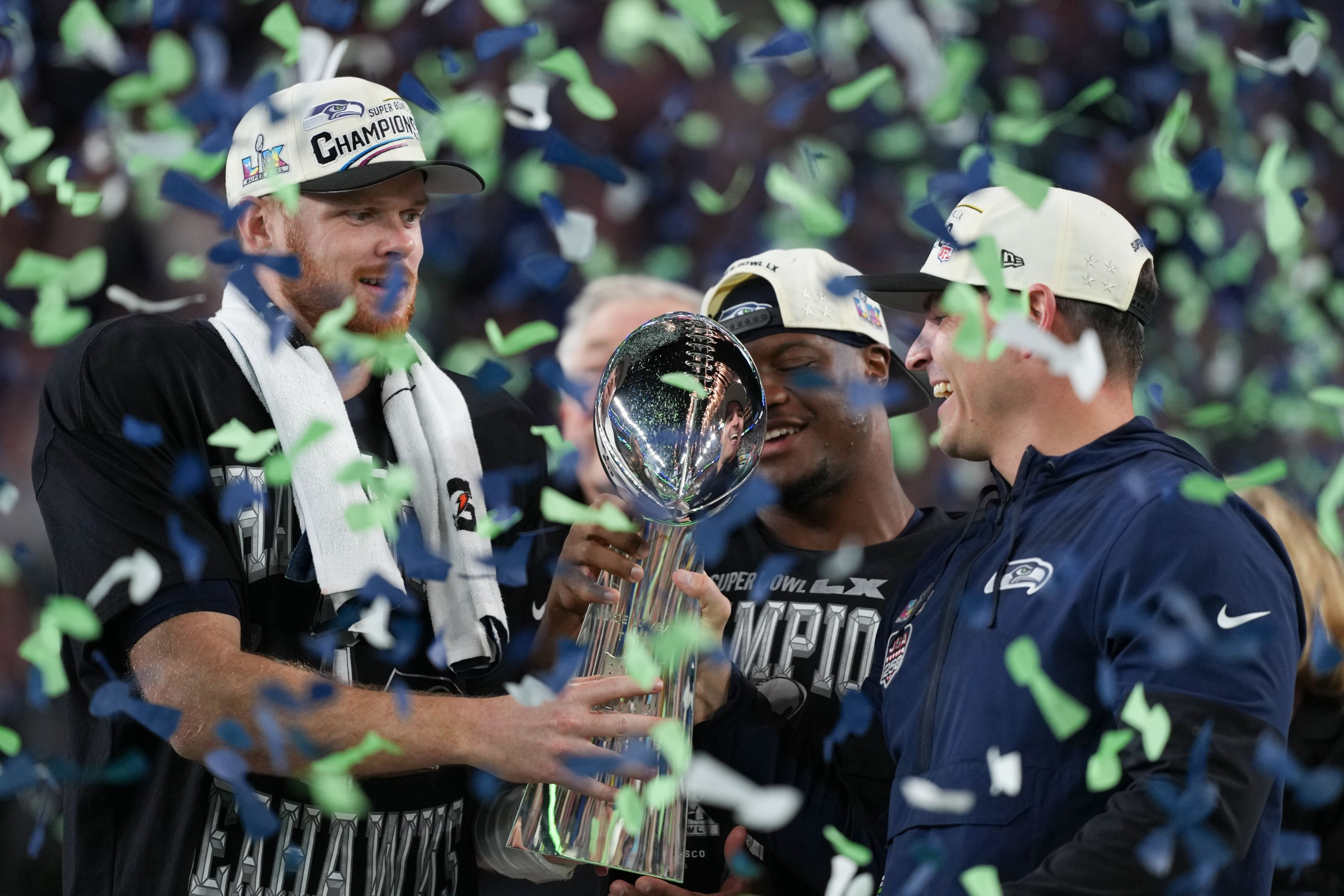
It’s official!
Super Bowl LX is in the books and the Seattle Seahawks are the champs. There was no fluke or ambiguity this time around. They were the better team. They played better than the New England Patriots from start to finish. By halftime, Bad Bunny had more yards on the field than the Patriots offense.
They made it a little closer in the second half, but there was no magical comeback this time. The Seahawks held on and even widened their lead. Quarterback, Drake Maye, played one of the worst games a starting QB has ever played in the Super Bowl. By the end, you could easily tell that he and the entire Patriots offense had played an historically easy schedule. They coasted their way to the Super Bowl. Then, they finally played a legitimately good team and they were trash.
Now, I already mentioned that I was rooting hard for the Seahawks. I freely admit I’m glad they won and not just because they were the better team. I genuinely believe that them winning might have saved the NFL.
Because, with all due respect to fans in New England, I think the league and the sport would be irreparably damaged if the Patriots won again. The NFL has all these rules and policies in place meant to ensure parity. But that didn’t stop Tom Brady and the Patriots from absolutely dominating the AFC for 20 years. That shouldn’t have been possible, but Brady was just a once-in-a-generation quarterback. Someone like him does not come along very often.
Then, just five years later, the Patriots draft Drake Maye and they’re back in the Super Bowl in his second season. Considering how many other teams have suffered decades without a franchise quarterback, let alone a Super Bowl appearance, it’s just not fair. It feels too much like the New York Yankees always buying their way to another World Series, which they did for nearly a century. It’s not good for the sport. It’s not good for fans outside New England. And I don’t think the NFL could’ve endured seeing yet another Patriots Super Bowl.
The fact that the Patriots played so badly is actually a relief. I think even those in executive suites at the NFL understand that on some level. They all want a league where any team has a chance to go all the way. But that just hasn’t been true of the AFC for years now. It’s been either the Chiefs or the Patriots, with the Bengals having only broken that pattern once. It’s one thing for a team to have a dynasty. It’s quite another for an entire conference to be so lopsided.
With the conclusion of Super Bowl LX, fans can rest easy that another Patriots dynasty hasn’t begun. Next season will be interesting in that the Patriots will definitely have a harder schedule. There’s no way they’ll get as lucky as they did this season. It’s also likely that a few teams will go from worst to first or have magical runs. The Seahawks took an unconventional path to their championship run. That should give hope to multiple teams this offseason. It’s way more hope than would’ve been possible, had the Patriots won.
So, with the conclusion of another season, we can all take a deep breath. The NFL is safe from another Patriots dynasty, at least for now. The Seahawks are the champs for only the second time in their history. It’s going to be a long offseason. But thankfully, there’s hope that another team will go on a run like the Seahawks did.
Super Bowl LX Is HERE!
Today is Super Bowl Sunday.
For football fans of all types, it is truly one of the best days of the year. It is the holiest of holy events for fans of the gridiron. Even if your team didn’t make it, it’s a spectacle worth watching. Two teams have navigated the rigors of the regular season and the high stakes of the playoffs. Now, they’re one game away from the ultimate prize and a date with the Lombardi Trophy.
I’ve already made my preparations. I have some buffalo wings ready to go. I have a full six-pack of beer. I’ve got chips, dip, and assorted snacks that should keep my mind and liver in the right state for the entire game. I can safely say I am ready. I know exactly what to do in the hours before kickoff. I know exactly where I’ll be when the game commences.
Now, I will acknowledge that the matchup this year is not the least bit compelling. I’m not just saying that because my predictions at the beginning of the season were dead wrong. Compared to past years, Super Bowl LX is decidedly lacking in drama. I think a big reason for that has to do with the fact that the New England Patriots are back in the Super Bowl.
While I can’t speak for all football fans, I can still say with confidence that nobody outside the New England area wanted to see the Patriots back in the Super Bowl this soon. They had two decades with Tom Brady in which they appeared in 10 Super Bowls. Then, once Brady left the team, we went through a stretch when it was just the Kansas City Chiefs playing every single year, usually alternating with the 49ers or the Eagles.
For the Patriots to return this quickly just feels wrong on so many levels. The NFL has all these policies and rules meant to maintain parity. Yet the team that enjoyed a 20 year dynasty of dominance is already back in the big game. It’s not fair. It’s not right. And I guarantee that if they win, it will be a net negative for the NFL and the sport.
That’s not to say I’m a huge fan of the Seahawks, but I’m definitely rooting for them. They’ve had only two Super Bowl appearances and this past season has been nothing short of remarkable. Unlike the Patriots, they didn’t have an easy schedule. They didn’t have the luxury of playing backup quarterbacks in the playoffs. They earned their place the hard way and under a first-year head coach, no less. Them winning it all will be a net positive.
But that’s the thing about football. There are no guarantees. What a majority of fans want to happen rarely happens because they don’t control the outcome. Only the players on the field can do that. Later today, they’ll get their chance. We’ll see who the better team is and who deserves to be a Super Bowl champion. I know who I’m rooting for. I genuinely hope it’s a good game.
Regardless of my feelings towards both teams, this is it. The end of one NFL season is upon us. The Super Bowl is here.
Let’s fucking go!


 Jack Fisher's Official Publishing Blog